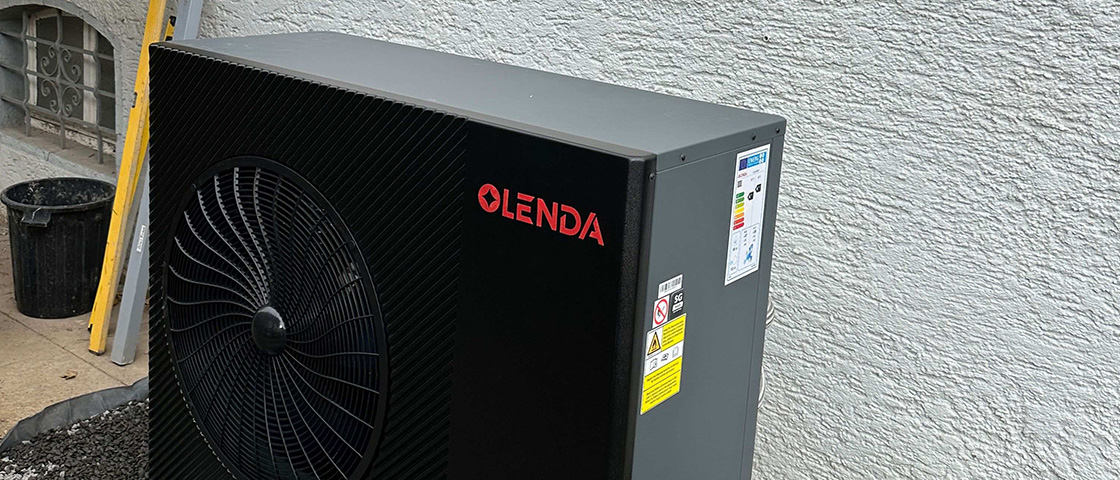
Publisher: Olenda

February 06, 2026
Air source heat pumps, as efficient and energy-saving devices that integrate heating, cooling, and domestic hot water supply, have quietly entered countless households. They function like a loyal "household energy manager," working silently and inconspicuously. However, even the most reliable equipment requires careful maintenance. Following seasonal patterns for targeted maintenance can not only ensure its efficient and stable operation throughout the year but also effectively extend its service life and reduce energy consumption and maintenance costs. This article will break down the key points of seasonal maintenance for air source heat pumps in detail, allowing you to keep your air source heat pump in optimal condition at all times.

Spring: Everything comes back to life, comprehensive "physical examination" and seasonal preparation. In spring, the climate is pleasant, the demand for heating decreases, and the cooling mode has not yet been turned on. It is the golden time for a comprehensive "physical examination" and maintenance of air energy.
Cleaning the main unit is crucial: After operating through a winter, a significant amount of dust, willow catkins, leaves, and other debris will accumulate on the heat exchanger (fins) of the main unit, severely impacting heat exchange efficiency. Maintenance tips: After turning off the power, gently brush away the surface debris with a soft-bristled brush, and then thoroughly rinse it from top to bottom using a low-pressure water gun (such as a household car wash water gun). Remember not to use a high-pressure water gun, as it may damage the delicate fins.
Check electrical safety: The humid spring poses a challenge to electrical systems. Maintenance tips: Carefully inspect the power wiring terminals for tightness, looseness, or signs of burning; observe the interior of the electrical control box for signs of moisture or insect infestation, and ensure it is dry and clean.
System mode switching and trial operation: If your equipment requires manual switching between winter and summer modes, please refer to the instruction manual and perform the switch at the end of spring. Briefly activate the cooling mode to check for normal operation and any abnormal noises, preparing for the upcoming summer driving season.

Summer: Efficient cooling, focus on heat dissipation and operating status. Summer is the season when the air-source heat pump's cooling function shines. The core of maintenance lies in ensuring its efficient heat dissipation to avoid "heatstroke".
Ensure good ventilation and unobstructed flow: A good ventilation environment must be maintained around the main unit. Maintenance points: Re-check and remove any obstacles within a range of at least 1 meter from all directions around the main unit to ensure smooth air circulation and prevent high-pressure protection or even shutdown of the compressor due to poor heat dissipation.
Regularly observe operational data: pay close attention to the operating status of the host during refrigeration. Maintenance points: listen carefully to ensure the compressor and water pump are operating smoothly; feel the temperature at the air outlet during refrigeration to ensure it is sufficiently low; and check if the set water temperature matches the actual temperature of the water discharged.
Condensate water discharge inspection: Condensate water is generated in cooling mode. Maintenance points: Ensure that the condensate water drainage pipe is unobstructed to avoid leakage due to blockage, which may soak the main unit or the wall.
Autumn: Be prepared for the rainy season and make adequate preparations for a warm winter. The maintenance in autumn is the cornerstone of efficient heating in winter. Its content is similar to that in spring, but the focus shifts to ensuring the reliability of the heating system.
Repeat the spring cleaning steps: thoroughly clean the heat exchanger of the main unit again to ensure optimal heat absorption during the heating season.
Inspect the water system: This is the top priority of autumn maintenance. Maintenance points:
Pipe insulation: Check whether the insulation cotton of exposed water pipes and valves is intact. If there is any damage, repair it in time to prevent heat loss and pipe frost cracking in winter.
Water replenishment and exhaust: Check whether the system water pressure is within the normal range (usually 1-2 Bar). If it is too low, water replenishment is required. At the same time, perform exhaust operations on the fan coil or floor heating manifold to avoid air blockage causing local heating issues.
Consider professional cleaning: If the equipment has been in use for 2-3 years, it is recommended to have a professional clean the heating pipeline to remove scale and impurities and restore the system's heat transfer efficiency.